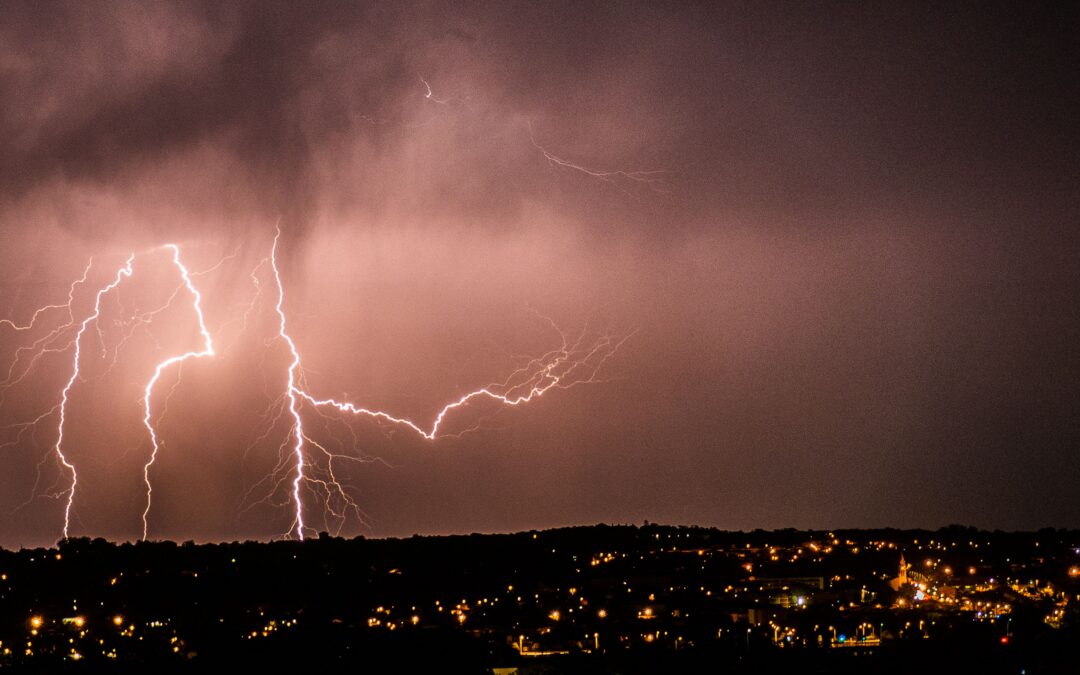
Lightning can damage a residential solar system, but the damage is not always a shattered or visibly burned solar panel.
A severe electrical event can potentially affect multiple parts of an existing system, including solar panels, inverters, wiring, disconnects, communications equipment, optimizers, microinverters, and other electrical components. A homeowner may discover the problem because the entire system stops producing, an inverter begins reporting a fault, or monitoring data disappears after a storm.
The timing can be an important clue, but it is not proof of what failed.
If your solar system behaved normally before a severe storm and changed immediately afterward, the next step is to document what happened and determine which part of the system was affected.
Lightning Does Not Have to Leave Obvious Panel Damage
When people think about lightning damage, they often picture a direct strike that leaves visible burn marks or shattered equipment.
That can happen, but post-storm solar problems can also be much less obvious.
A homeowner might instead notice:
- Solar production suddenly stopped
- An inverter will not reconnect
- A new inverter fault or error code appeared
- Monitoring stopped reporting current production
- One or more panels or module positions no longer report normally
- Electrical equipment repeatedly trips
- System behavior became intermittent after the storm
- Visible equipment appears displaced or damaged
None of these symptoms proves by itself that lightning caused the problem.
The important information is the sequence of events: the system was operating one way before the storm and differently afterward. That provides a starting point for determining whether the change is connected to storm-related electrical damage or another condition.
More Than the Solar Panels Can Be Affected
Solar panels are only one part of a residential photovoltaic system.
Electricity generated on the roof passes through other equipment before it can be used by the home or supplied to the electrical grid. Depending on the system, that equipment can include module-level electronics, wiring, connectors, an inverter, disconnect equipment, monitoring hardware, and other electrical components.
That means a storm-related failure does not have to appear as physical damage to the front of a panel.
Inverters
Inverters contain power electronics and can be affected by electrical disturbances.
After a severe storm, a homeowner might encounter a persistent fault, failure to reconnect, a blank display, or a system that no longer converts solar production normally.
An inverter error still needs to be diagnosed. The inverter may have suffered damage, or it may be responding to an electrical condition somewhere else in the system.
If a new warning appears after the storm, our guide to solar inverter error lights and fault messages explains why the displayed error should be treated as a diagnostic clue rather than automatic proof that the inverter failed.
Optimizers and Microinverters
Systems using module-level electronics can experience problems that appear more localized.
Instead of the entire system going offline, monitoring may show one panel position or part of the array behaving differently after the storm.
Determining whether the issue involves the panel, optimizer, microinverter, wiring, communications, or another component requires more than the monitoring display alone.
Wiring and Electrical Components
Storm-related electrical effects can also involve wiring, connections, disconnects, and other parts of the system's electrical path.
This can produce faults without leaving an obvious visual sign on the solar panels.
Monitoring Equipment
An electrical event may also affect communications or monitoring equipment.
If the monitoring app goes offline after a storm, that does not automatically establish whether solar production stopped. The system may have lost communications, or the monitoring outage may be occurring alongside an actual equipment failure.
If the solar system appears to be operating but the app remains offline or stops updating, our guide to solar monitoring system repair and troubleshooting costs explains the difference between a reporting problem and a broader production issue.

A Normal-Looking Array Does Not Rule Out Damage
Looking at the solar panels from the ground can be useful for spotting obvious physical damage, but it cannot confirm that the system is electrically healthy.
A panel's front glass may look normal while another component has stopped functioning.
Likewise, electrical damage can exist in equipment that is not readily visible from ground level.
This is why a post-storm assessment should consider the entire operating system, not just whether the roof-mounted modules look intact.
Monitoring history can provide additional context. If production was normal before the storm and changed sharply afterward, that timeline is useful evidence even when there is no visible damage.
Physical Damage vs. Electrical Damage
Storm damage generally raises two different types of concerns.
Physical damage may be easier to recognize. Examples can include broken glass, displaced equipment, damaged mounting components, or other visible changes.
Electrical damage may reveal itself through system behavior rather than appearance. A persistent inverter error, loss of production, repeated protective shutdown, or unexplained failure of individual components can indicate that further evaluation is needed.
A system can potentially have both.
For example, severe weather could physically affect one portion of an array while an electrical event affects another component. That is one reason it can be misleading to focus only on the most obvious visible problem.
If a panel itself has been visibly cracked, shattered, or otherwise damaged, see our guide to the cost to replace a damaged solar panel for more information about when repair may be possible and when replacement makes more sense.
Safety Comes Before Troubleshooting
Damaged solar equipment should be treated cautiously after severe weather.
Solar panels can continue generating DC electricity whenever sufficient light reaches them. A utility outage or equipment shutdown does not necessarily mean every part of a rooftop solar system is electrically inactive.
Homeowners should avoid:
- Touching loose or exposed wiring
- Handling visibly damaged electrical equipment
- Opening inverter or electrical enclosures
- Disconnecting rooftop solar connectors
- Climbing onto the roof to inspect panels
- Attempting electrical testing
- Repeatedly resetting equipment that continues to report a fault
If there are loose conductors, damaged electrical components, displaced equipment, or another apparent safety concern, keep clear of the affected area and arrange for qualified evaluation.
Preserve the Storm Timeline
One of the most useful things a homeowner can do after a suspected storm-related failure is document the condition before error information or production history is lost.
From a safe location, record the date of the storm and approximately when the system's behavior changed.
Save screenshots showing production before and after the event when monitoring data is available.
Also document:
- Inverter error codes
- Monitoring alerts
- The last time normal production was reported
- Whether the utility lost power during the storm
- Whether the system returned to normal after utility power was restored
- Visible damage that can be photographed safely from the ground
Avoid clearing error histories simply to see whether the warning disappears.
That information can help establish whether the problem began at the same time as the storm and give the technician a clearer starting point.
Why Repeatedly Resetting the System Can Be Misleading
A reset may sometimes clear a temporary condition, but a fault that repeatedly returns is telling you something different.
Protective equipment may be shutting the system down because it continues to detect an electrical condition outside its acceptable operating range.
Repeatedly cycling the system does not identify that condition.
It can also make troubleshooting more difficult if useful error information is cleared before it is documented.
After a storm, the objective should not be simply to make an error message disappear. It should be to determine why the system changed behavior and whether any equipment was damaged.
Diagnosing a Post-Storm Solar Failure
The diagnostic path depends on what changed.
If the entire system stopped producing, the investigation may involve inverter status, electrical conditions, system inputs, disconnect equipment, wiring, and other relevant components.
If only one part of the array appears affected, module-level equipment or an individual panel may require closer attention.
If production appears normal but the monitoring app stopped reporting, the issue may be concentrated in communications equipment rather than power production.
A qualified evaluation can use the storm timeline, monitoring history, equipment status, visible conditions, and appropriate testing to narrow the problem.
Infinity Solar Solutions estimates solar diagnostics and troubleshooting at $350–$500* for general planning purposes when the failed component has not already been identified.
If testing confirms a specific repair, the applicable repair scope can then be established based on what was actually damaged.
Homeowners who want to understand what that troubleshooting process involves can review what a solar diagnostic visit includes and whether it is worth the cost.
Storm Damage and Homeowners Insurance
Suspected lightning damage may also raise the question of whether to file a homeowners insurance claim.
Coverage cannot be determined from the solar damage alone.
Whether a particular loss is covered depends on the homeowner's policy, cause of loss, exclusions, deductible, limits, and the insurer's claim process.
Infinity Solar Solutions can help identify damage to the existing solar system and determine what repair work appears necessary. The insurance company determines whether the loss is covered and what the policy will pay.
Documentation can therefore serve two purposes: helping diagnose the solar problem and creating a clearer record of what changed after the storm.
Signs That a Post-Storm Solar Problem Needs Professional Attention
Not every monitoring interruption during bad weather represents damaged equipment. Temporary utility and communications disruptions can occur.
Professional evaluation becomes more important when the system does not return to normal or when new symptoms persist after the storm has passed.
Examples include a system that remains offline, an inverter fault that continues returning, unexplained production loss, repeated electrical trips, individual panels or module positions that no longer report normally, or any visible sign of damaged electrical equipment.
A severe storm followed immediately by a lasting change in system behavior creates a reasonable basis for investigating whether the two are connected.
For a broader post-storm troubleshooting framework, see Solar Storm Damage in Hampton Roads: What to Check and When to Call.
Lightning and Solar Damage FAQs
Can lightning damage a solar inverter?
Yes. Inverters contain power electronics and can be affected by electrical disturbances. An inverter fault after a storm should still be diagnosed because the error can also result from conditions elsewhere in the solar system.
Can lightning crack or break a solar panel?
Severe weather and electrical events can damage solar equipment, including modules. Visible cracking is only one possible form of storm-related damage.
Can lightning damage solar equipment without leaving visible marks?
Yes. A solar array can look normal from the ground while electrical or electronic components have been affected.
Does an offline solar app after a storm mean the system was damaged?
Not necessarily. The issue may involve monitoring communications, or the loss of monitoring may accompany an actual system failure. Additional system information is needed to distinguish the two.
Should I reset my inverter after a lightning storm?
If equipment continues reporting the same fault, repeatedly resetting it is not a substitute for determining the cause. Preserve the error information and avoid opening or handling electrical equipment.
Should I climb onto the roof to look for storm damage?
No. Use safe ground-level observations and leave rooftop and electrical evaluation to qualified personnel.
Can Infinity Solar Solutions evaluate storm damage on a system installed by another company?
Yes. Infinity Solar Solutions works on existing residential solar systems, including systems installed by other companies.
After the Storm: Focus on What Changed
A lightning storm does not automatically mean your solar panels were damaged, and a normal-looking roof does not prove that the system escaped electrical damage.
The most useful clues are often the changes that occurred immediately afterward: lost production, a new inverter fault, missing monitoring information, repeated shutdowns, or visible equipment damage.
Document those changes without interacting with electrical components. If the problem persists, Infinity Solar Solutions can evaluate the existing residential solar system to determine what was affected and what repair is appropriate.
Pricing Disclaimer
*Pricing is provided for general planning purposes only and is not a quote or guarantee. Actual pricing depends on the specific system, equipment, condition, accessibility, labor, parts availability, warranty coverage, electrical scope, roof conditions, and other project factors. A system evaluation may be required before Infinity Solar Solutions can confirm the appropriate repair or project scope and final price.