If your solar panel inverter suddenly shows a red light, starts blinking, or displays an error message, it usually catches your attention right away—and for good reason. Most homeowners in Hampton Roads do not check their inverter every day, so when something changes, the first thought is often: “Is my system still working, or did it just stop?”
In many cases, the solar panel system has either reduced production or shut itself down to protect key components. The good news is that inverter warnings do not always mean something major has failed. But they do mean the system needs attention—and understanding what is behind that warning is the first step toward getting things back to normal.
Infinity Solar Solutions regularly helps homeowners in Virginia Beach and across Hampton Roads figure out what inverter error lights actually mean and what to do next. In many cases, the issue is fixable. In other cases, the light is the first clue that a deeper electrical or communication problem needs professional diagnostics.
Why inverter warning lights matter
Your inverter is one of the most important parts of the system. It converts the power from your solar panels into usable electricity for your home, and it often gives the first visible sign that something is off.
A lot of homeowners first notice trouble when they see:
- A sudden spike in their electric bill.
- A monitoring app that looks different or stopped updating.
- A light on the inverter they have never seen before.
When that happens, the light is not the problem itself—it is the system’s way of asking for attention. If the inverter is warning you, it is usually trying to prevent a larger issue or tell you that a protective shutdown has already occurred. Ignoring that signal can mean extended downtime or continued underperformance. Addressing it early usually leads to a faster, simpler fix.
What different lights typically mean
Different inverter brands use different indicators, but the general pattern is usually similar:
- Green: normal operation.
- Yellow or blinking: warning or partial fault.
- Red: system fault, shutdown, or more serious issue.
A red light does not always mean the solar panel inverter is completely dead or that the entire solar array failed. Sometimes the light points to a grid condition, communication issue, wiring problem, overheating, or an internal component fault. The key is not to ignore it and not to guess.
One of the most common things Infinity Solar sees is a homeowner assuming a red light means the whole system failed, when the actual issue is more specific and often much more fixable. That is why the exact color, behavior, and timing of the light matter.
Common cause #1: Grid or utility issues
Sometimes the solar panel inverter is reacting to conditions outside the home. If the utility voltage or frequency is out of range, the inverter may pause, fault, or shut down temporarily to protect the system.
This can happen during storms, utility events, or periods of unstable electrical conditions. In Hampton Roads, weather and coastal conditions can affect grid stability, creating short‑term interruptions that look worse than they are from the homeowner’s perspective. A warning light in these cases can be the solar panel inverter’s way of saying it is protecting itself until conditions normalize.
How Infinity Solar approaches it
- Checks whether the inverter fault is tied to grid conditions.
- Reviews the error code and operating behavior.
- Confirms whether the issue is temporary or recurring.
- Determines whether additional electrical diagnostics are needed.
Common cause #2: Wiring or connection problems
Loose wiring, damaged connectors, and disturbed communication lines are common causes of inverter warnings. In Hampton Roads homes, Infinity often finds these issues after roof work, storm damage, remodeling, or general wear over time.
The solar panel inverter may still be powered, but it cannot operate correctly if a connection is loose or a wire has been compromised. That can cause intermittent faults, low production, or error lights that keep returning even after a reset.
How Infinity Solar fixes it
- Inspects wiring and terminations around the inverter.
- Identifies loose, damaged, or unsafe connections.
- Repairs the problem using proper materials and methods.
- Tests the system afterward to confirm stable operation.
This is the kind of problem that often gets missed when attention stays on the light instead of the larger solar panel system around it. It is also a good example of why a warning light does not always mean replacement—sometimes the system simply needs careful troubleshooting and a proper repair.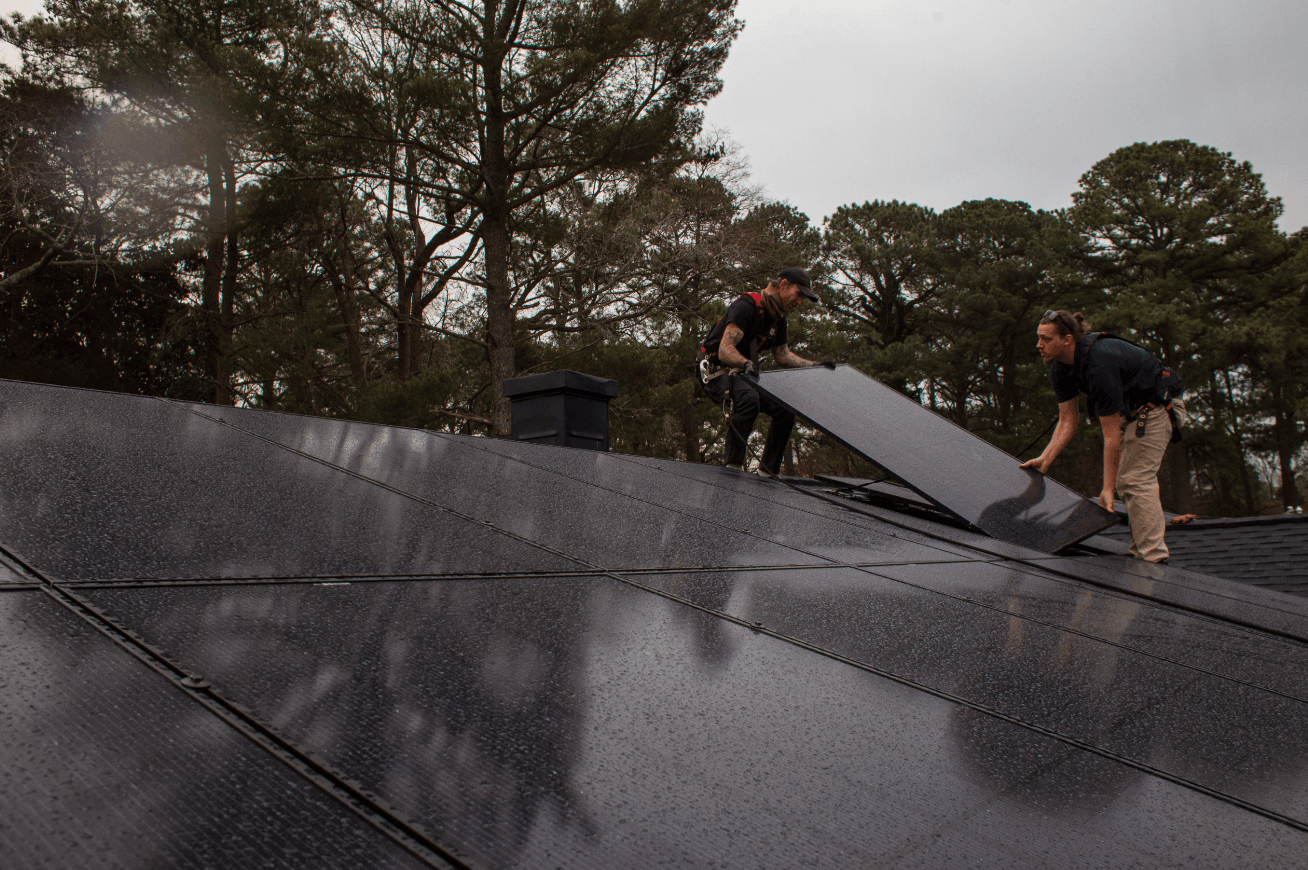
Common cause #3: Overheating in coastal conditions
Solar panel equipment can overheat if ventilation is poor, if the inverter is installed in a hot location, or if the unit is simply working too hard for the conditions. In coastal Virginia, heat and humidity can make those problems more noticeable.
Homeowners may see:
- Warnings during the hottest part of the day.
- The system recovering later in the evening.
- Production dropping during peak heat.
An inverter that runs too hot can shut down temporarily, reduce output, or begin showing recurring faults. If heat issues are ignored, the equipment may wear out faster than it should.
How Infinity Solar fixes it
- Checks the inverter location and ventilation.
- Reviews whether heat is contributing to the fault.
- Determines whether the issue is environmental or hardware‑related.
- Recommends the right repair or relocation strategy if needed.
Common cause #4: Ground faults or internal faults
Some solar panel inverter lights point to deeper electrical issues, such as:
- Ground faults.
- Internal component failures.
- Repeated shutdown conditions.
If the inverter keeps faulting, shuts down repeatedly, or shows the same error after resetting, the system is telling you the problem has not been solved. That is usually the point where homeowners need a company that can inspect the system as a whole and identify the root cause instead of just clearing the message.
How Infinity Solar fixes it
- Reads the error code and interprets the fault behavior.
- Tests the system to identify the root cause.
- Determines whether repair, replacement, or warranty support is the best path.
- Confirms the system is operating safely before leaving the site.
Common cause #5: Monitoring and communication issues
Sometimes homeowners think the inverter has failed when the real problem is communication. The app goes blank, the inverter light changes, or data stops updating—but the system may still be producing in some capacity.
This is especially common when:
- Internet service or routers change.
- Monitoring hardware disconnects or loses network access.
- The original installer is no longer managing the system.
From the homeowner’s perspective, it looks like the system stopped working. In reality, it may be a visibility issue rather than a production issue.
How Infinity Solar fixes it
- Checks whether the issue is production‑related or communication‑related.
- Verifies network and monitoring connectivity.
- Reconnects or reconfigures equipment as needed.
- Confirms that the system and monitoring platform are talking correctly again.
What you should do first
If you see an inverter warning light, your first step is not to reset everything blindly. It is to observe and document what you see.
Helpful details to note:
- The color of the light.
- Whether it is solid or blinking.
- Any code or message on the display.
- Whether the monitoring app also shows a problem.
- When the issue started.
You do not need to troubleshoot the solar panel system yourself, but having those details ready makes diagnostics much faster. It also helps determine whether the problem is urgent or more likely tied to grid or communication issues.
What not to do
It can be tempting to reset the inverter and hope the issue goes away. Sometimes a one‑time reset will clear a temporary condition, but if the root problem is still there, the warning usually comes back.
More importantly:
- Do not open the inverter or remove covers.
- Do not handle electrical connections or internal wiring.
- Do not repeatedly reset the system without understanding the cause.
A solar panel system is still an electrical system, and inverter faults should be evaluated carefully. The goal is not just to turn the light off—it is to restore safe, consistent production.
How Infinity Solar Solutions handles inverter problems
When Infinity is called out for inverter warnings, the team does not treat the light as the problem—it treats it as a starting point.
The typical process focuses on:
- Identifying the error or warning in detail.
- Checking whether the issue is internal, electrical, environmental, or communication‑related.
- Diagnosing the root cause behind the fault.
- Explaining solar panel repair or replacement options clearly.
- Verifying that the system is producing normally again after service.
Infinity Solar also regularly works on systems installed by other companies, which is important for homeowners whose original installer is no longer available. That repair‑first, diagnostics‑focused approach helps homeowners get clear answers instead of assumptions.
When to schedule diagnostics
You should schedule service if:
- Your inverter shows a red, yellow, or blinking warning light.
- The display shows an error code, fault, or shutdown message.
- Your monitoring app and inverter both show production problems.
- The warning light keeps returning after a reset.
- Your original installer is unavailable and you need local repair support.
An inverter warning light does not always mean something major has failed—but it does mean the system needs attention. The sooner you understand what is causing it, the easier it is to fix and the less production you lose in the process. Infinity Solar Solutions helps Hampton Roads homeowners diagnose inverter faults, communication issues, and electrical problems so they can get their system back to producing with confidence.