
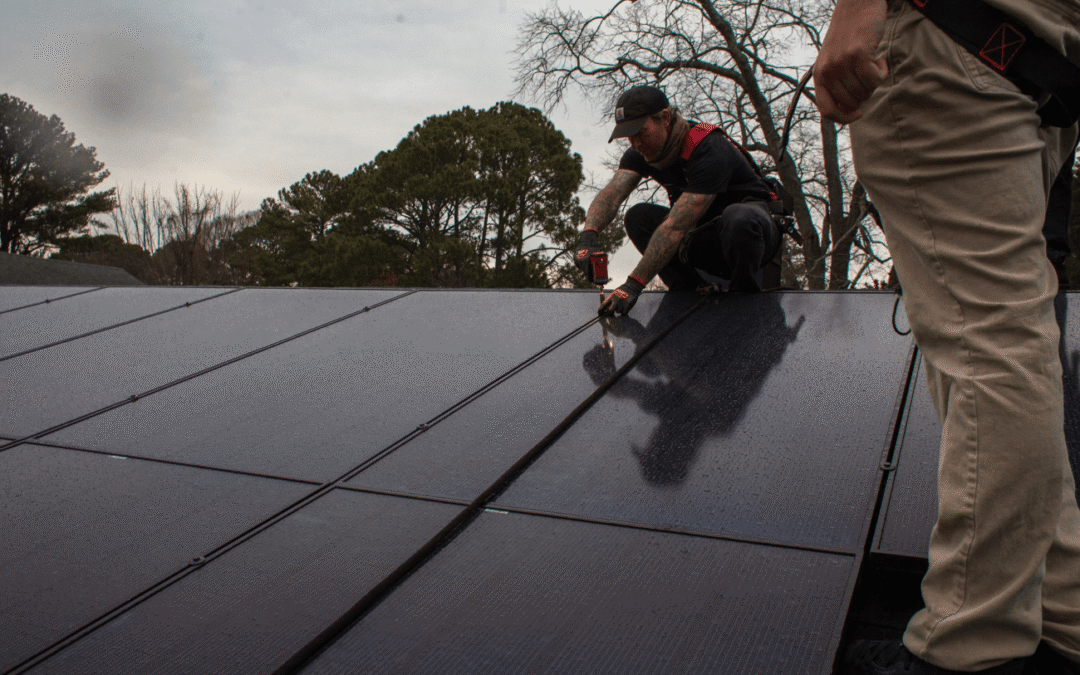
A microinverter is a small inverter installed at or near an individual solar panel. Instead of sending the panel's DC electricity to one central inverter for conversion, the microinverter converts that module's power to AC at the roof.
One Panel, One Conversion Point
In a typical microinverter architecture, each module has its own conversion electronics. That distributed design is the defining difference from a string-inverter system, where multiple panels depend on a central inverter.
Why Module-Level Conversion Changes Troubleshooting
When one microinverter develops a problem, the rest of the array may continue producing. The homeowner may see one module position offline or underproducing instead of losing the entire system. On a large array, the overall production change may be subtle even though one device has stopped contributing.
What the Monitoring Platform May Show
Many microinverter systems provide module-level monitoring. That can make it easier to identify the location associated with an abnormal reading. Monitoring is a clue rather than a final diagnosis: a low-output position can involve the microinverter, panel, connector, wiring, or communications path.
For more context on how this information reaches the homeowner, see our guide to how solar monitoring systems work.
Microinverter vs. Optimizer
Both are module-level power electronics, but they do different jobs. A microinverter performs DC-to-AC conversion at the panel. An optimizer manages DC power at the panel and normally sends it to a central inverter for final conversion. The separate article What Is a Solar Optimizer? covers that component in depth.
What Microinverter Failure Can Look Like
- One panel position reports zero or unusually low production
- A device is missing or offline in monitoring
- A module-level error appears
- Overall system production declines modestly while most of the array continues operating
Those symptoms do not justify replacing a microinverter automatically. The affected position should be evaluated so the failed component is identified correctly.
Why Roof Access Matters
Microinverters are commonly mounted beneath modules, so physical replacement generally requires roof access and access to the affected panel position. That is different from a wall-mounted string inverter that may be reachable from the ground.
Microinverter Replacement Cost
Infinity Solar Solutions estimates microinverter replacement at $350 + $60 per unit* for general planning purposes. Diagnostics are estimated at $350–$500* when the failed component has not yet been confirmed.
When the cause of an offline module is unclear, understanding what a solar diagnostic visit includes can help homeowners understand the fault-finding process before replacement.
What About Older or Discontinued Microinverters?
Compatibility can become the central issue on older systems. The original model may be discontinued, monitoring support may have changed, or replacement hardware may need to work with an existing generation of equipment. The practical repair question is whether a compatible solution can restore the affected position without replacing unrelated equipment.
Why a Microinverter Failure May Be Easy to Miss
Because power conversion is distributed across the array, one failed microinverter may not shut down the entire solar system. The remaining modules can continue producing, so the homeowner may see only a modest change in total output. Module-level monitoring is especially valuable in this situation because it can reveal one position that has stopped reporting or producing while the rest of the array looks normal.
What an Offline Module Does - and Does Not - Prove
An offline module icon is a starting point, not a diagnosis. The microinverter may have failed, but the same display can sometimes reflect a communications problem, module issue, connector problem, wiring condition, or another fault associated with that position. Confirming the cause matters because roof access and panel removal may be required to reach the device. The goal is to avoid opening the array for a component replacement that does not address the real problem.
When Multiple Microinverters Go Offline
If several microinverters disappear at the same time, technicians look beyond the assumption that several independent devices failed simultaneously. Shared branch-circuit, gateway, communications, or electrical conditions may need to be considered. The number and location of affected modules can therefore change the diagnostic path substantially.
Our article on solar monitoring communication errors explains how shared connections can interrupt reporting without necessarily indicating that each affected microinverter has failed.
Frequently Asked Questions
Does every solar panel have a microinverter?
No. Only microinverter-based systems use one at or near each module. Other arrays use string inverters, sometimes with optimizers.
Can one bad microinverter stop the whole system?
A single microinverter problem is often localized, although actual behavior depends on the system and fault.
How do I know if I have microinverters?
Original equipment documents, monitoring information, and system labels can help identify the architecture.
How much does microinverter replacement cost?
Infinity Solar Solutions estimates $350 + $60 per unit* for general planning purposes.
Pricing Disclaimer
*Pricing is provided for general planning purposes only and is not a quote or guarantee. Actual pricing depends on the specific system, equipment, condition, accessibility, labor, parts availability, warranty coverage, electrical scope, roof conditions, and other project factors. A system evaluation may be required before Infinity Solar Solutions can confirm the appropriate repair or project scope and final price.