
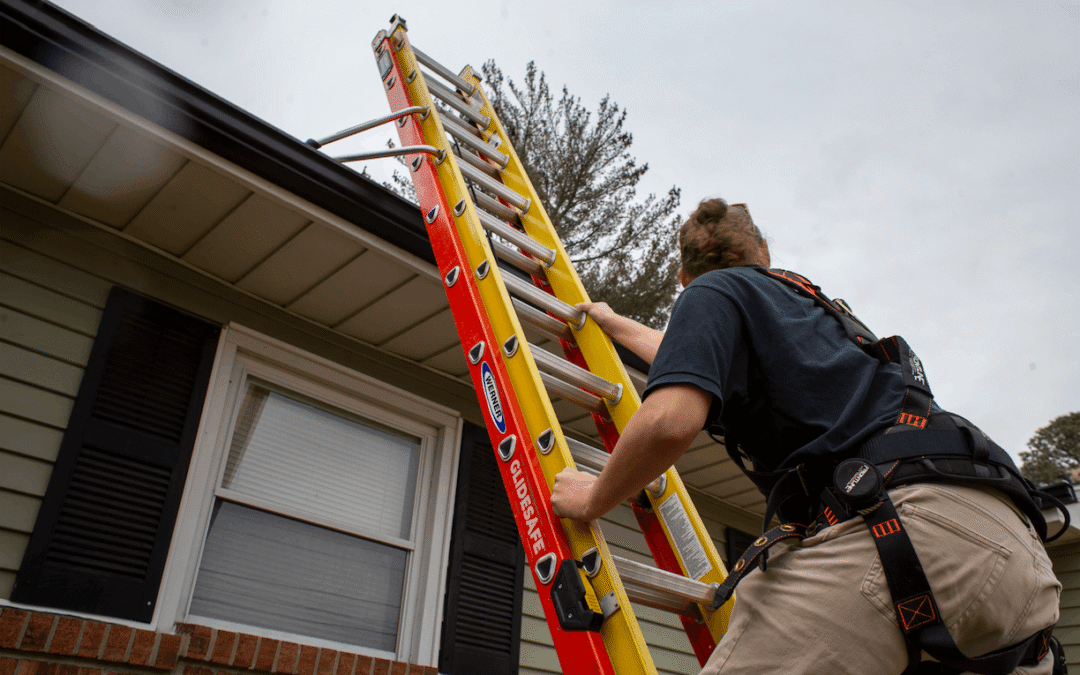
Solar panels are designed to operate for decades. Reaching 20, 25, or even 30 years of age does not mean a panel suddenly stops producing electricity or automatically needs replacement.
What normally changes is how much electricity the panel can produce.
Solar modules gradually lose some performance as they age. Research from the National Renewable Energy Laboratory (NREL) has found that degradation generally occurs slowly over time, although the rate varies by module technology, climate, installation conditions, and other factors.
That makes solar panel lifespan less like an expiration date and more like an aging curve.
For homeowners with an older residential solar system, the more useful question is not simply, “How old are my panels?”
It is:
How is the system performing at its current age, and is there evidence of normal degradation or an actual problem?
There Is No Single Solar Panel Expiration Date
You will often see 25 or 30 years used when discussing solar panel lifespan.
Those numbers are useful reference points, but they should not be interpreted as a countdown to failure.
A panel does not reach its 25th year and suddenly stop producing electricity.
Instead, several different concepts tend to get grouped together when people talk about how long solar panels last:
| Term | What It Actually Means |
|---|---|
| Solar panel lifespan | How long a module remains useful and serviceable |
| Performance degradation | The gradual reduction in electricity production as the module ages |
| Performance warranty | A manufacturer's contractual commitment regarding specified performance over a defined period |
| Product warranty | Coverage provided under the manufacturer's specific warranty terms |
| Panel failure | A physical or electrical problem that prevents the module from operating as intended |
These concepts overlap, but they are not interchangeable.
A panel can be outside a warranty period and still operate.
A panel can also be relatively young and develop physical damage or another failure that requires attention.
Age provides context. Condition and performance tell you much more.
What Normal Solar Panel Aging Looks Like
Solar modules are exposed to years of sunlight, temperature changes, moisture, wind, and other environmental stresses.
Their output generally declines gradually rather than abruptly.
NREL research has commonly found degradation rates in the range of roughly 0.5% to 1% per year, although actual degradation varies considerably by module technology, climate, manufacturing, system conditions, and the specific study being considered.
To understand what gradual degradation means, consider a simplified example.
If a hypothetical panel lost 0.5% of its output capacity per year, the change after one year would be relatively small. Even after many years, the panel could still be producing a substantial portion of its original output.
That is very different from a system that performs normally on Monday and suddenly loses a major amount of production on Tuesday.
Normal aging happens slowly.
Sudden failure does not.
A 25-Year-Old Panel Can Still Be Useful
The age of a solar array should not be used by itself to decide whether it needs replacement.
Imagine two residential systems that are both 25 years old.
One continues producing consistently relative to its age and historical performance, has no known module damage, and remains useful to the homeowner.
The other has damaged modules, recurring electrical problems, unavailable replacement components, or performance that has deteriorated beyond what would reasonably be expected from gradual aging.
Those systems may be the same age, but they do not present the same service decision.
This is why an older array is better evaluated according to its condition, production, component support, and repair needs rather than a birthday on the installation record.
Sudden Production Loss Is Not Normal Solar Panel Degradation
This distinction is particularly important for homeowners with older systems.
If solar panels normally degrade gradually, a major production loss over a short period should not automatically be blamed on their age.
A sudden or substantial change can point toward a different issue, such as:
- Inverter problems
- Wiring or electrical faults
- Failed optimizers or microinverters
- Panel damage
- Monitoring problems
- New shading conditions
- Storm-related damage
- Another equipment failure
The fact that an array is 15 or 20 years old can make it tempting to attribute every performance problem to “old panels.”
That can lead to the wrong conclusion.
If a system was producing normally for its age and then suddenly changed, the timing of the change matters.
For homeowners dealing specifically with that symptom, Why Did My Solar Production Suddenly Drop? addresses abrupt performance changes in more detail.
The Panels May Outlast Other Solar Equipment
Another reason homeowners sometimes misinterpret solar system age is that the modules are not the only equipment involved.
A residential solar system may include:
- An inverter
- Microinverters or optimizers
- Monitoring equipment
- Wiring and connectors
- Disconnects
- Combiner equipment
- Mounting components
Those components do not necessarily age at the same rate as the panels.
For example, U.S. Department of Energy guidance notes that traditional string inverters generally have shorter expected service lives than PV modules, while microinverter lifespans can be closer to module lifespans.
That means a homeowner can have perfectly serviceable older panels while another component requires repair or replacement.
A system that stops producing after many years should therefore not be diagnosed as “the panels are worn out” until the actual failed component is identified.
What Can Cause a Solar Panel to Age Prematurely?
Gradual performance degradation is expected. Premature physical or electrical problems are different.
Module condition can be affected by issues such as:
Cell cracking. Damage within the cells can affect electrical performance even when it is difficult to recognize from the ground.
Moisture intrusion. Failure of protective materials can allow moisture to affect internal components.
Delamination. Separation of module layers can compromise the panel over time.
Hot spots. Localized heating can indicate or contribute to module performance problems.
Physical impact. Hail, falling debris, branches, or other events can damage module glass or internal components.
Electrical or connection problems. Junction boxes, leads, connectors, and related equipment can develop faults independently of normal module degradation.
A panel affected by one of these conditions may need attention well before another module of the same age.
That is another reason chronological age is an incomplete measure of remaining useful life.
What Should You Expect at Different Stages of a Solar System's Life?
There is no universal timeline that predicts exactly when a residential solar system will need service, but homeowners can think about aging in stages rather than treating a particular year as an expiration date.
Earlier Years: Establish the Baseline
Production history is especially useful during the earlier years of operation because it establishes how the system behaves across seasons.
Preserving access to monitoring and basic equipment documentation can make future changes easier to recognize.
Middle Years: Watch the Entire System, Not Just the Panels
As equipment ages, service needs may begin to involve components other than the modules.
An inverter, monitoring system, wiring connection, optimizer, microinverter, or other component can require attention even while the panels remain productive.
Later Years: Condition Becomes More Important Than Age
For a system approaching or exceeding two decades of operation, questions about equipment availability and compatibility can become more important.
The original panel model may be discontinued. Monitoring platforms may have changed. The original installer may no longer be available. Some components may already have been replaced.
None of those conditions automatically makes the array obsolete.
They simply mean future repairs may require a better understanding of what equipment remains in place and what compatible options are available.
When Does an Older Solar Panel Actually Need Replacement?
Replacement makes more sense when there is evidence supporting it—not simply because a module has reached a particular age.
Reasons an individual panel may need replacement can include confirmed physical damage, electrical failure, an unsafe condition, or performance problems that cannot reasonably be corrected through a more limited repair.
Compatibility also matters.
When the original panel model has been discontinued, the question becomes whether a suitable replacement can work with the existing system's electrical characteristics, dimensions, mounting configuration, connectors, and other relevant equipment.
Infinity Solar Solutions estimates:
| Service | Planning Estimate |
|---|---|
| Minor solar panel repair | $350–$450* |
| Solar panel replacement | $550–$650* |
| Diagnostics / troubleshooting, when required | $350–$500* |
An older panel therefore does not automatically become a $550–$650* replacement simply because of its age. The condition of the module and the cause of the performance problem need to support that decision.
For more detail about individual module failures, Broken Solar Panels: Understanding Damage, Performance, and Repair Options explains how damage can affect a panel and the surrounding array.
How to Evaluate an Older Solar System
If your residential solar system is 15, 20, or 25 years old, five pieces of information can provide a much better picture than age alone.
1. Production History
Has output declined gradually over many years, or did something change abruptly?
Gradual decline can be consistent with aging. A sharp change deserves a different explanation.
2. Current Equipment Condition
Are there damaged panels, recurring inverter faults, electrical warnings, or other known problems?
A system can have aging panels without having failed panels.
3. Previous Repairs
Knowing whether an inverter, optimizer, microinverter, wiring component, or panel has already been replaced helps establish the system's current configuration.
4. Monitoring Availability
Historical data makes it easier to compare current performance with the system's own past behavior.
If monitoring access has been lost, restoring available information may help establish a new baseline.
5. Parts and Equipment Compatibility
As systems age, replacement components can become harder to source. Knowing what equipment is installed helps determine whether an individual failure can be repaired without unnecessarily replacing unaffected equipment.
This condition-based approach is especially useful for orphaned systems whose original solar company is no longer available.
Infinity Solar Solutions services existing residential solar systems, including systems installed by other companies.
Solar Panel Lifespan FAQs
Do solar panels stop working after 25 years?
No. Twenty-five years is not an automatic expiration point. Panels may continue producing electricity beyond that age, although output and condition vary by system.
How quickly do solar panels lose performance?
Solar panel degradation is generally gradual. NREL research has reported degradation rates commonly around 0.5%–1% annually, but actual rates vary by module technology, climate, manufacturing, and field conditions.
Why did my older solar system suddenly lose production?
Normal module aging occurs gradually. A sudden decline is more consistent with a fault, equipment failure, changed condition, or other problem that may require troubleshooting.
Do inverters last as long as solar panels?
Not necessarily. String inverters often have shorter expected service lives than modules, so inverter service or replacement may be needed while the panels remain productive.
Should I replace all of my solar panels when one fails?
Not automatically. The failed module, system architecture, remaining panel condition, and replacement compatibility should be evaluated before determining the appropriate scope.
Is an older solar system still worth repairing?
Age alone cannot answer that question. The system's condition, production, repair requirements, equipment compatibility, and homeowner's objectives all affect whether continued repair is practical.
Pricing Disclaimer
*Pricing is provided for general planning purposes only and is not a quote or guarantee. Actual pricing depends on the specific system, equipment, condition, accessibility, labor, parts availability, warranty coverage, electrical scope, roof conditions, and other project factors. A system evaluation may be required before Infinity Solar Solutions can confirm the appropriate repair or project scope and final price.