

Solar panels generally require relatively little routine maintenance compared with many other home systems. The modules have no moving parts, and homeowners do not need to constantly service them to keep a properly functioning system operating.
But that does not mean a residential solar system should be completely ignored after it is installed.
The panels are only one part of the system. Inverters, wiring, connectors, disconnects, mounting components, monitoring equipment, optimizers, microinverters, and other equipment can all influence performance over time.
For homeowners, useful solar maintenance is less about constantly working on the panels and more about knowing how the system normally performs, noticing meaningful changes, and distinguishing routine upkeep from a problem that needs repair.
A Practical Maintenance Routine for an Existing Solar System
Solar maintenance does not need to become a complicated homeowner checklist.
A useful routine can be organized around three areas:
Watch performance. Know approximately how your system normally behaves across different seasons so a meaningful change is easier to recognize.
Stay aware of visible conditions. From the ground, notice obvious damage, debris, new shading, or other significant changes around the array.
Respond to persistent problems. An inverter fault, sudden production decline, damaged panel, or repeated system shutdown is no longer routine maintenance. It is a troubleshooting issue.
This distinction helps prevent two common mistakes: ignoring a developing problem because the system is “low maintenance,” or treating every small production fluctuation as evidence that something is wrong.
Cleaning Is Only One Part of Solar Maintenance
Solar panel maintenance is often reduced to one question: How often should I clean my panels?
There is no universal cleaning schedule that applies to every home.
Soiling can affect solar production, but how much it matters depends on the amount and type of buildup, weather, panel orientation, local conditions, and other system-specific factors.
That makes routine cleaning different from troubleshooting a performance problem.
If production declines sharply from one day to the next, an inverter begins reporting an error, or the monitoring system suddenly stops updating, assuming the panels simply need cleaning can delay identification of the actual issue.
Cleaning addresses surface conditions.
It does not repair a failed inverter, damaged panel, electrical fault, communications problem, or malfunctioning module-level component.
Use Production History as an Early-Warning Tool
One of the most useful forms of ongoing solar maintenance does not require touching the equipment at all.
Review your system's monitoring information periodically.
The goal is not to compare every day's production with the previous day. Solar output naturally changes with cloud cover, season, temperature, daylight hours, shading, and other environmental conditions.
Instead, look for patterns that are unusual for your system.
For example, pay closer attention when:
- Production changes sharply without an obvious weather explanation
- Output remains unusually low for an extended period
- The system stops producing
- Monitoring develops unexplained gaps
- The inverter begins displaying recurring faults
- Module-level monitoring shows one area consistently behaving differently
Historical production can be particularly valuable because it gives the homeowner a baseline. A system's own past performance is often more informative than expecting it to produce the same amount every day or every month.
Seasonal Changes Are Not Maintenance Problems
Solar output is not supposed to remain constant throughout the year.
Longer summer days and shorter winter days affect available solar energy. Weather patterns change. Temperatures vary. Trees can create different shading conditions as seasons change.
A homeowner who expects identical production throughout the year may interpret normal variation as a maintenance problem.
The more useful question is whether performance has changed in a way that cannot reasonably be explained by normal conditions.
A gradual seasonal change is very different from a system that suddenly loses a substantial amount of production or stops operating altogether.
That second scenario belongs in diagnostics rather than routine maintenance.
What You Can Observe Without Getting on the Roof
Homeowners can remain aware of system condition without performing rooftop inspections.
From a safe ground-level location, you may be able to notice:
- Obvious broken or shattered panel glass
- Large debris on or around the array
- Equipment that appears visibly displaced
- Vegetation that has begun creating new shading
- Changes following severe weather
- Other obvious physical conditions around accessible equipment
There are limits to what this can tell you.
Wiring, connectors, mounting points, junction boxes, and electrical components cannot be adequately evaluated simply by looking at the roof from the yard.
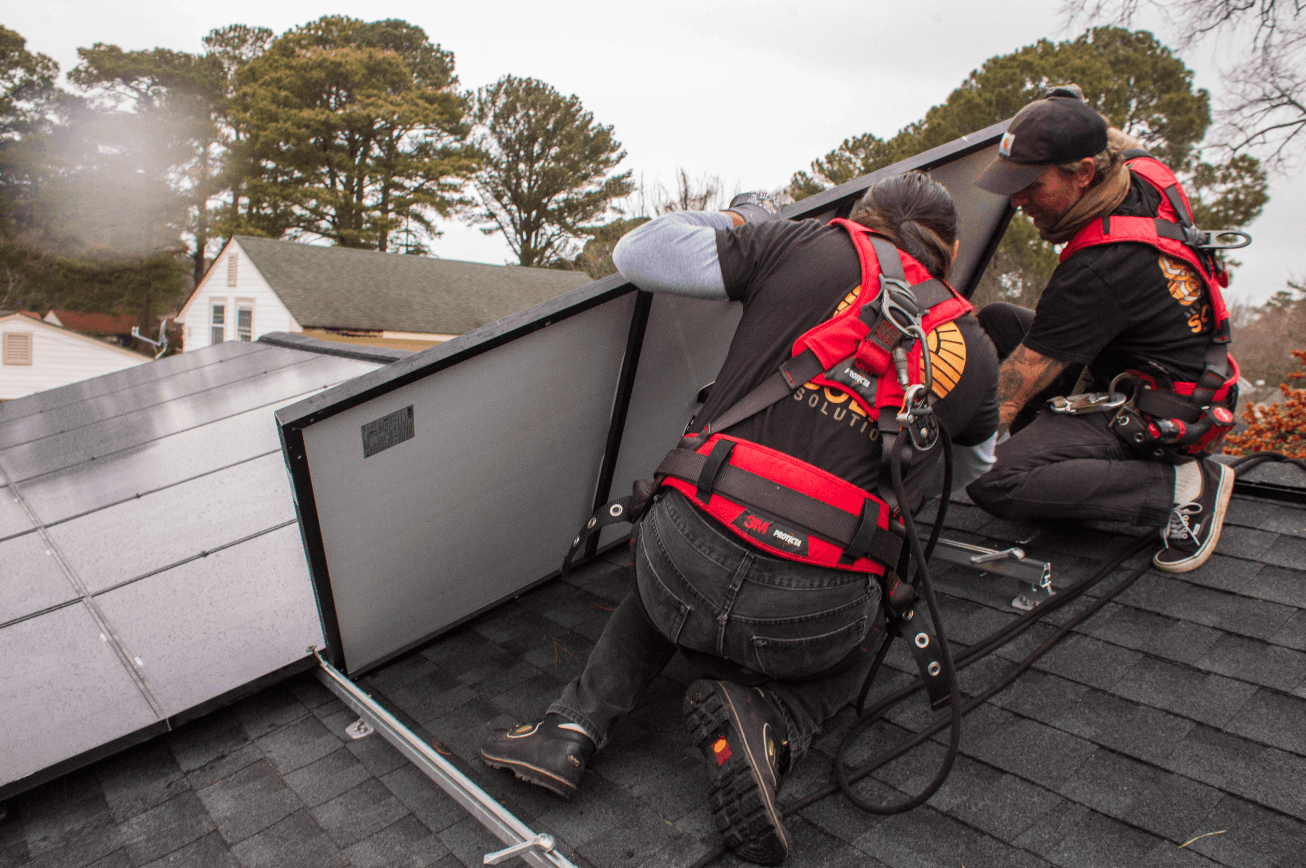
Homeowners should not climb onto the roof, disconnect solar connectors, open electrical equipment, or handle wiring as part of routine maintenance. Rooftop solar combines fall hazards with electrical equipment that can remain energized during daylight.
Preventive Maintenance and Corrective Maintenance Are Different
The word “maintenance” is used broadly, but it helps to separate preventive attention from corrective work.
Preventive Maintenance
Preventive maintenance is intended to support ongoing system condition and identify issues before they become larger problems.
This can include awareness of system performance and appropriate professional service based on the equipment and condition of the existing system.
Infinity Solar Solutions offers a solar system maintenance/service monthly contract at $2 per panel*.
Corrective Maintenance
Corrective maintenance begins when something has already failed or a specific problem has been identified.
Examples might include repairing damaged wiring, replacing a failed component, addressing a monitoring problem, or correcting another confirmed system fault.
At that point, the homeowner is no longer simply maintaining the system. A repair is required.
Keeping those categories separate makes it easier to understand what kind of service the system actually needs.
Maintenance Needs Can Change as a Solar System Ages
An older solar system does not automatically need extensive maintenance simply because of its age.
However, the information available about the system can change over time.
Homeowners may lose access to monitoring accounts. Equipment documentation may be misplaced. Manufacturers may discontinue certain components. The original solar company may close or stop servicing the system.
In those situations, establishing a current baseline can become valuable.
That might mean identifying the installed equipment, restoring available monitoring information, reviewing how the system is currently operating, and preserving documentation for future service.
This is particularly useful for orphaned solar systems.
Infinity Solar Solutions services existing residential solar systems, including systems whose original provider is no longer available.
Severe Weather Creates a Different Reason to Pay Attention
Routine maintenance and post-storm evaluation should not be treated as the same thing.
After significant weather, homeowners should pay attention to whether the system behaves differently.
A storm followed by normal operation may not create an obvious service need. A storm followed by a new inverter error, abrupt production loss, damaged panel, missing monitoring data, or visible equipment damage deserves more attention.
Document what changed and when it happened.
If visible damage is present, take photographs only from a safe location. Do not touch damaged electrical equipment or climb onto the roof to inspect it.
When severe electrical weather is involved, Lightning Damage and Residential Solar Systems: Signs to Watch After a Storm covers post-storm symptoms and safety considerations in greater detail.
The Point Where Maintenance Ends and Diagnostics Begin
This is one of the most important distinctions for homeowners.
Maintenance is appropriate when the system is operating normally and the objective is ongoing care.
Diagnostics becomes appropriate when there is a problem that needs an explanation.
Consider the difference:
| Routine Maintenance Situation | Diagnostic Situation |
|---|---|
| Reviewing normal production trends | Production suddenly drops |
| Watching for obvious physical changes | System stops producing |
| Maintaining awareness of system condition | Inverter repeatedly reports a fault |
| Routine service of an operating system | Monitoring disappears unexpectedly |
| Establishing a baseline for an older system | Electrical warning or ground fault appears |
| Checking system condition after time has passed | Performance changes sharply after a storm |
Infinity Solar Solutions estimates solar diagnostics and troubleshooting at $350–$500* when the cause of a problem needs to be identified.
The distinction matters because maintenance should not be used as a substitute for troubleshooting.
If the system has a specific symptom, the objective should be to identify that symptom's cause rather than simply performing general maintenance and hoping performance improves.
For homeowners who want to understand that process in more detail, What Does a Solar Diagnostic Visit Include, and Is It Worth the Cost? explains what separates diagnostics from routine service.
A Simple Way to Think About Solar Maintenance
Homeowners do not need to constantly interact with their solar equipment.
Instead, think about maintenance in terms of the system's condition:
The System Is Operating Normally
Continue monitoring general performance and remain aware of visible conditions.
The System Is Operating, but Something Has Changed
Compare the change with weather, seasonal patterns, monitoring history, and other available information. Persistent unexplained changes deserve closer attention.
The System Has a Clear Fault or Failure
Move beyond routine maintenance. A recurring inverter error, significant production loss, damaged equipment, or electrical warning calls for diagnosis of the actual problem.
This approach keeps routine solar ownership relatively simple without treating a low-maintenance system as a no-maintenance system.
Solar Maintenance FAQs
Do solar panels need annual cleaning?
Not universally. Cleaning needs depend on actual soiling, environmental conditions, system configuration, and applicable manufacturer guidance rather than a single schedule for every home.
Do solar panels need annual professional maintenance?
There is not one universal service interval that applies to every residential system. Maintenance needs can depend on the equipment, system condition, manufacturer guidance, environment, and performance history.
Can I perform solar maintenance myself?
Homeowners can review monitoring information and make safe observations from the ground. Rooftop inspections and electrical work should be handled by qualified personnel.
Does solar maintenance prevent equipment from failing?
No. Maintenance can support system awareness and help identify developing conditions, but inverters and other components can still age or fail.
Is low solar production a maintenance issue?
Not necessarily. A persistent or sudden production decline may require diagnostics to determine whether the cause involves panels, an inverter, wiring, monitoring, shading, or another system condition.
Do older solar panels require more maintenance?
Age alone does not determine the maintenance requirement. The condition of the panels, other system components, monitoring availability, and actual performance are more useful indicators.
Pricing Disclaimer
*Pricing is provided for general planning purposes only and is not a quote or guarantee. Actual pricing depends on the specific system, equipment, condition, accessibility, labor, parts availability, warranty coverage, electrical scope, roof conditions, and other project factors. A system evaluation may be required before Infinity Solar Solutions can confirm the appropriate repair or project scope and final price.