
A damaged residential solar system can create two separate questions almost immediately:
What needs to be repaired?
And:
Will homeowners insurance cover it?
Those questions are related, but they are not interchangeable.
A solar service provider can identify damaged equipment, determine the repair needed, and establish the solar-related scope and cost. Your insurance company determines whether the cause of that damage is covered under your policy, how your deductible applies, and what the insurer will pay.
For homeowners trying to decide whether to handle solar damage as a direct repair or potential insurance claim, the most useful starting point is usually the cause and extent of the damage.
Repair or Insurance Claim? Start Here
| Situation | What to Consider |
|---|---|
| Equipment stops working without a specific damaging event | Determine what failed and whether ordinary repair is needed |
| One panel is damaged | Establish repair vs. replacement cost and cause of damage |
| Damage appears immediately after hail, wind, lightning, or falling debris | Document the event and review insurance requirements |
| Solar equipment and the roof are both damaged | Solar and roofing scopes may need to be documented separately |
| Repair cost is relatively limited | Compare the repair expense with your deductible and policy terms |
| Damage may involve several solar components | Define the full solar repair scope before making assumptions about cost |
| Loose wiring or damaged electrical equipment is present | Address safety first rather than delaying action for claim documentation |
This is not a determination of insurance coverage. It is a framework for deciding what information you need before choosing the next step.
The Cause of Damage Changes the Conversation
A failed solar component does not automatically create an insurance claim.
Solar equipment can require repair because of component failure, equipment age, electrical faults, weather damage, impact, roof-related events, or other conditions.
The distinction matters because homeowners insurance policies can treat different causes of loss differently.
For example, a solar panel that fails because of an equipment problem presents a different situation from a panel damaged when a tree limb falls during a storm.
Likewise, an inverter that stops operating because of an internal failure is not necessarily the same insurance situation as equipment affected by a severe electrical event.
Do not assume that damage is either covered or excluded based only on what happened to the solar equipment. The applicable policy and insurer determine coverage.
Define the Solar Repair Before Evaluating the Financial Decision
When the extent of damage is unclear, determining what actually needs repair can make the insurance decision much easier.
Consider a homeowner who sees one visibly damaged solar panel after a storm.
If evaluation determines that the problem is limited to that panel, the homeowner has a relatively defined repair scope to compare against the deductible and insurance process.
If testing instead finds damage involving multiple panels, wiring, module-level electronics, or another electrical component, the financial picture may look considerably different.
Infinity Solar Solutions uses the following planning estimates for several relevant residential solar repairs:
| Service | Planning Estimate |
|---|---|
| Diagnostics / troubleshooting | $350–$500* |
| Minor solar panel repair | $350–$450* |
| Solar panel replacement | $550–$650* |
| Inverter repair | $350–$400* |
| Inverter replacement | $500–$600* |
| Wiring / electrical repairs | $350–$1,000* |
| Combiner box repair | $500–$600* |
| Disconnect replacement | $500–$600* |
These estimates do not determine whether filing an insurance claim makes financial sense. They provide context for understanding the potential repair cost once the affected equipment is known.
When the failed component or extent of damage has not yet been confirmed, a solar diagnostic visit can help establish what the system actually needs before the financial decision is made.
Your Deductible Belongs in the Decision
Even when a damaging event may be covered, the deductible can affect whether a claim results in an insurance payment.
Suppose the solar repair is relatively limited. Depending on the policy deductible, the homeowner may determine that the repair cost does not substantially exceed the amount they would be responsible for before insurance contributes.
A more extensive loss involving multiple components could create a different calculation.
The important point is not to make assumptions about that calculation before you have both pieces of information:
1. What does the solar system need?
2. What does the insurance policy say?
Questions about deductibles, claim history, coverage, exclusions, and potential insurance consequences should be discussed with the insurer or appropriate insurance professional rather than the solar repair contractor.
Documentation Is Most Useful Before Conditions Change
When damage follows a specific event, preserve what you can safely document.
Useful records may include:
- Ground-level photographs of visible damage
- Date and approximate time of the event
- Inverter error codes
- Solar monitoring alerts
- Production screenshots
- Production history from before and after the event
- Information about a utility outage
- Notes about hail, wind, falling debris, or another relevant event
The goal is to create a factual timeline.
If emergency tree removal, roofing work, or another repair will alter the damaged area, homeowners may also want to ask their insurer what documentation is required before conditions change, when doing so is practical and safe.
Never climb onto the roof, handle damaged electrical equipment, or touch exposed wiring simply to obtain photographs for a claim.
When the Roof and Solar Array Are Both Involved
Storm damage can sometimes create two related but separate repair scopes.
The roof may require work from a roofing contractor while the existing solar system requires service from a solar professional.
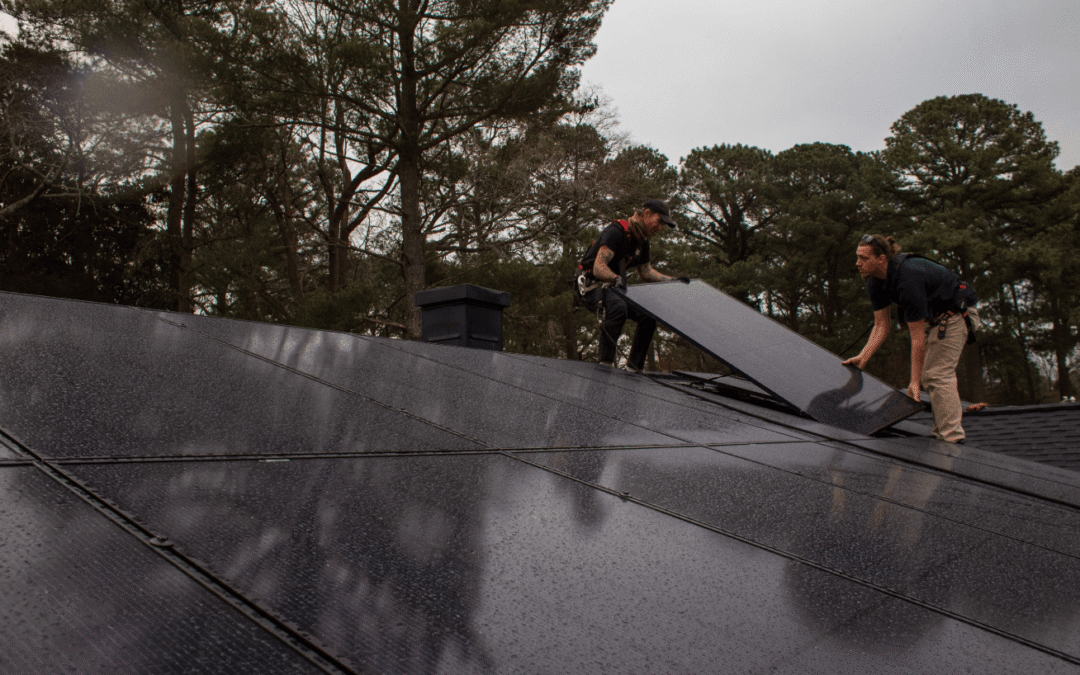
If panels need to be removed so roof work can proceed, that creates another solar-related scope even when the panels themselves are not damaged.
Infinity Solar Solutions estimates removal and reinstall for roof replacement at $275 per panel*.
For example, a 20-panel array would have a planning estimate of $5,500* for removal and reinstall alone.
That amount is separate from the roofing contractor's scope and from any additional repair required for damaged solar equipment.
Keeping those scopes distinct can make documentation clearer for the homeowner, contractor, and insurer.
Homeowners facing roof work can learn more about the cost to remove and reinstall solar panels for a roof replacement.
Safety Takes Priority Over Preserving Evidence
Insurance documentation matters, but it should never require leaving an obvious electrical hazard untouched.
If storm damage leaves exposed conductors, loose electrical equipment, broken components, or another potentially hazardous condition, keep away from the affected area and arrange appropriate professional assistance.
Solar panels can continue producing DC electricity in daylight, even when other parts of the system appear to be shut down.
Do not:
- Touch exposed solar wiring
- Open electrical equipment
- Disconnect rooftop connectors
- Move damaged modules
- Climb onto the roof to inspect damage
- Repeatedly reset equipment that continues reporting an electrical fault
Take photographs only from locations where doing so is safe.
The Contractor and Insurer Have Different Jobs
Keeping these responsibilities separate helps prevent confusion during a potential claim.
Infinity Solar Solutions Can Help Establish:
- What solar equipment appears damaged
- What additional troubleshooting may be required
- What solar repair is recommended
- Whether a panel or component appears repairable or requires replacement
- The applicable solar repair scope and estimate
The Insurance Company Determines:
- Whether the reported event is covered
- Whether exclusions apply
- How the deductible is calculated
- What documentation the claim requires
- What amount the insurer will approve or pay
Infinity Solar Solutions should not guarantee claim approval or interpret a homeowners policy as though it were the insurer.
Similarly, an insurance coverage decision does not replace the technical task of determining what the solar system actually needs.
A Single Damaged Panel May Be a Different Decision Than Widespread Damage
The extent of the loss matters.
Infinity Solar Solutions estimates minor solar panel repair at $350–$450* and solar panel replacement at $550–$650*.
If one panel is damaged and the rest of the system is unaffected, the repair scope may remain relatively contained.
However, severe weather can sometimes affect more than the most visible component.
If a storm is followed by a damaged module, inverter errors, production loss, or other electrical symptoms, additional evaluation may be appropriate before concluding that the visible panel is the entire problem.
For more information about what one damaged module can mean for the array, see Broken Solar Panels: Understanding Damage, Performance, and Repair Options.
For suspected electrical storm damage involving components beyond the panels, see Solar System Stopped Working After a Storm.
If evaluation confirms that an individual module needs to be replaced, How Much Does It Cost to Replace a Damaged Solar Panel? explains the replacement-cost considerations in more detail.
A Practical Decision Path After Solar Damage
Rather than beginning with “Should I file a claim?”, work through the situation in this order:
1. Address Immediate Safety Concerns
Keep clear of loose wiring, visibly damaged electrical equipment, and unsafe rooftop conditions.
2. Preserve Evidence
Photograph visible damage safely, save monitoring data and error messages, and record when the event occurred.
3. Review Your Insurance Requirements
Check your policy information and contact your insurer as appropriate to understand its documentation and claim process.
4. Determine the Solar Repair Need
If the damage or system condition is unclear, a solar evaluation can establish which equipment is affected and what repair appears necessary.
5. Compare the Repair Scope With the Insurance Situation
Once the repair need is defined, you can evaluate the estimated expense alongside your deductible and the information provided by your insurer.
6. Keep Coverage and Repair Decisions Separate
The repair contractor determines what work the solar system needs. The insurer determines what the policy covers.
That distinction remains important even when both processes are happening at the same time.
Solar Repair and Insurance FAQs
Does homeowners insurance cover solar panels?
Coverage varies based on the policy, system ownership, cause of loss, exclusions, limits, and other policy terms. Confirm coverage with your insurance company.
Should I call Infinity Solar Solutions or my insurance company first?
There is no universal order for every situation. Address immediate safety concerns first. If the condition is safe, review your insurer's documentation requirements and arrange a solar evaluation when the damaged equipment or repair scope needs to be identified.
Can Infinity Solar Solutions tell me whether my claim will be approved?
No. Infinity Solar Solutions can document the solar condition and repair scope. The insurance company determines coverage and claim approval.
What if only one solar panel was damaged?
One damaged panel does not automatically mean the entire array needs replacement. The panel and surrounding system can be evaluated to determine the appropriate repair scope and compatibility considerations.
What if my roof also needs replacement?
Roofing and solar work may involve separate scopes. If the existing solar array must be removed for roof replacement and reinstalled afterward, Infinity Solar Solutions estimates that solar service at $275 per panel*.
Should I photograph damaged solar equipment for insurance?
Documentation can be useful, but only take photographs from a safe location. Do not climb onto the roof or approach exposed wiring or damaged electrical equipment to document a claim.
Pricing Disclaimer
*Pricing is provided for general planning purposes only and is not a quote or guarantee. Actual pricing depends on the specific system, equipment, condition, accessibility, labor, parts availability, warranty coverage, electrical scope, roof conditions, and other project factors. A system evaluation may be required before Infinity Solar Solutions can confirm the appropriate repair or project scope and final price.